Why Free QR Code Generators Matter for Small Business Owners
If you run a small business, you know how important it is to stand out. Imagine a bakery owner printing 500 flyers for a weekend market, each with a plain black and white QR code leading to their menu. The codes work, but they look just like everyone else's. Customers scan them, but forget which shop the code belonged to by the end of the day. The owner spent money on printing, but missed a big chance to make their bakery stick in people's minds.
Many business owners think QR codes have to look plain and generic. They assume adding a logo or brand colors will cost money or take special tech skills. But that's not true anymore. Today, a QR code generator free with design tools lets you create codes that match your brand, work on any device, and don't cost a cent. For restaurants, retail shops, and event promoters, every menu, tag, or flyer becomes a branded touchpoint that helps people remember you.
What Makes a QR Code Generator Free and Useful
Not all free QR code makers are the same. Some let you make basic codes for free but hide the best features behind paywalls. Others limit how many times people can scan your code or set expiration dates. Before picking a tool, check what 'free' really means.
A truly free QR code maker should let you create codes with no payment details required. You should be able to download your code in high-res formats like PNG or SVG without a watermark. The code should not expire unless you delete it yourself. Some platforms offer unlimited scans on free plans, while others set a monthly cap. If you plan to print codes on menus or signs, unlimited scans are important because you can't fix a printed code if it stops working.
Find tools that let you customize codes without extra cost. Good options include changing colors, adding your logo, and tweaking the shape of the code blocks. A free tool should also let you test the code before you print. Many business owners only find out their code won't scan after they've printed hundreds of flyers. Don't skip testing.
How to Create a QR Code with Your Logo in Minutes
Adding your logo to a QR code is quick if you have the right custom QR code generator. Start by picking a free QR code maker that lets you upload a logo. Most support PNG or JPEG files. For the cleanest look, use a logo with a transparent background. If you only have a white background, that's fine if your QR code's background is also white.
Upload your logo and place it in the center of the code. The generator usually resizes it for you, but you can adjust the size if needed. Keep your logo small—no bigger than 20% of the QR code area. QR codes use error correction, so they can scan even if part of the pattern is covered. But if you cover too much, the code won't work.
After adding your logo, choose colors that match your brand. You can change the foreground (the dark squares) and the background (usually white). Always keep high contrast so the code scans easily. For example, a dark purple logo on a light cream background works great. A yellow logo on white is hard to scan. Test your QR code with at least three different phones before printing. You might spot problems that only show up on older devices.
According to Statista, smartphone cameras have improved a lot in the last five years, but some older phones still struggle with low-contrast codes. Testing on several devices helps make sure everyone can scan your code.
Design Tips for QR Codes on Menus, Packaging, and Print
A QR code on a restaurant menu needs to be big enough to scan easily. For print, make codes at least 2 cm by 2 cm. Smaller codes might work on screens, but not on physical menus where people hold them farther away. If your menu is laminated, avoid glossy finishes because glare can block scanning. Matte lamination is better.
On product packaging, put the code where people naturally look. A skincare brand tested QR code spots on lotion bottles and found that codes near the ingredients list on the back label got 40% more scans than codes hidden on the bottom. People already turn the bottle to read ingredients, so they see the code without extra effort.
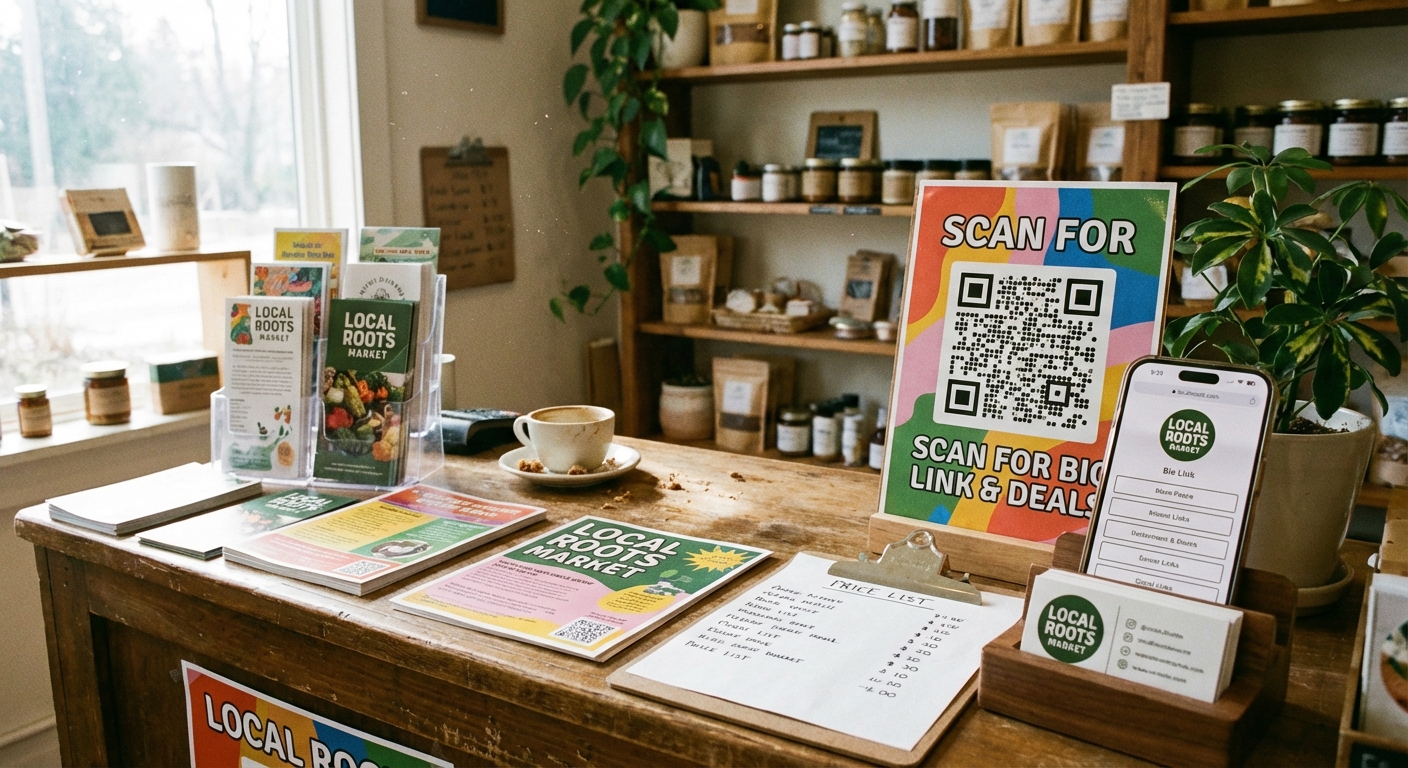
Always add a short call to action next to your code. Instead of 'Scan here', use something like 'Scan for ingredients' or 'Scan for recipes'. Clear instructions increase scan rates because people know what they'll get. A coffee roaster added 'Scan for brew tips' next to their QR code and saw scan rates double compared to codes with no text.
For event flyers, put the code in the bottom right corner. Most people hold flyers with their right hand, so this spot feels natural. Leave enough white space around your code so it stands out. A music festival had to reprint flyers after complaints that their QR codes wouldn't scan—the problem was busy graphics crowding the code. Adding a white border fixed it instantly.
Static vs Updatable QR Codes: What You Need to Know
Static QR codes have the final URL built right into the pattern. Once you print a static code, you can't change where it goes. So, if you print 1,000 flyers with a static code that links to your spring menu, and later want to update it for summer, you have to reprint all the flyers. Static codes are best for things that never change, like your business address or contact details.
With an updatable QR code generator, the code contains a short redirect link. When someone scans it, they go to the redirect first, which then sends them to your real destination. You can change where the code points any time, with no need to reprint. This is perfect for seasonal promotions. For example, a farm market prints flyers once in spring with an updatable QR code, then updates the link each week for new produce.
Updatable codes also track scan data. You can see how many people scanned your code, when, and what device they used. This helps you know which marketing works best. A yoga studio put QR codes on posters in three neighborhoods. The updatable code data showed one area got 60% of all scans, so they focused their next campaign there.
Most free QR code makers offer static codes with no scan limits. Updatable QR codes usually need a paid plan, or they have scan limits on free tiers. If you're printing codes on things that won't change, like packaging or signs, a static code is fine. If you want the flexibility to update links or track scans, updatable codes are worth the cost.
Common Mistakes That Break QR Codes
The most common mistake is using colors with low contrast. A light gray code on a white background might look stylish, but many phones can't read it. QR code readers need a clear difference between the dark and light parts. If you want a branded look, use your darkest brand color for the code and your lightest for the background. Navy blue on pale yellow works, but avoid light-on-light combos.
Another mistake is making the code too small. A 1 cm QR code on a business card might scan if conditions are perfect, but in low light or at a crowded event, it probably won't. For print materials people hold, codes should be at least 2 cm by 2 cm. For posters or signs that people scan from far away, make your code at least 10 cm wide.
Some owners go too far with design tweaks. They switch block shapes to circles or stars, or cram in several logos and graphics. While these changes might look cool, they often make codes unscannable. QR codes work because of their exact patterns. Too much change confuses scanners. Stick to simple tweaks: one logo, two colors, standard block shapes.
Finally, not testing before printing can waste hundreds on useless materials. A restaurant printed 2,000 menu inserts with QR codes pointing to the wrong URL. They only found out after the menus were on tables. Always scan your code with several devices before sending it to print. Try both iPhone and Android, since camera software can differ.
How Small Businesses Use QR Codes to Save Money
A pizza shop used to print new menus every time prices changed. Each run cost $200. Now, they use a single laminated menu with a QR code that always links to the latest digital menu. The printed menu only shows the restaurant's name, logo, and the QR code with 'Scan for full menu and prices'. They haven't paid for menu reprints in two years.
Event companies also save by using QR codes. A local theater group prints a single-page flyer with show times, ticket prices, and a QR code linking to cast info, director notes, and behind-the-scenes photos. Printing full programs for every show would have cost $500 each time. Now, the QR code method has cut that to almost nothing after the first flyer.
Retail shops use QR codes to give product info without making packaging crowded. A candle maker adds a small QR code to each label that links to burn time, ingredients, and scent notes. All that info wouldn't fit on the label, and bigger labels would cost more. The QR code gives customers everything they want to know, without changing the design.
According to HubSpot, 45% of shoppers have used a QR code while shopping in the last three months. This number keeps growing since 2020, so QR codes are now a normal part of shopping rather than something new. Small businesses that skip QR codes miss out on a simple way to give info and connect with customers without spending more on printing.
Choosing the Right Format for Downloading Your QR Code
When your QR code design is finished, you can download it in different formats. The most common are PNG, JPEG, and SVG. Each works best for certain uses.
PNG files are great for most digital and print needs. They support transparent backgrounds, so you can place your code on any color without a white box. PNGs keep their quality when resized within reason. Use PNG for social posts, email signatures, and print items like flyers and cards. Always download at the highest resolution, usually 300 DPI or more for print.
JPEG files have smaller file sizes, which helps for emails or websites where speed matters. But JPEGs don't support transparency, so you'll always have a colored or white box around your code. JPEGs also use compression, which can blur the edges a little. This usually doesn't hurt scanning, but PNG is higher quality for the same effort.
SVG files are vector graphics that scale to any size without getting blurry. If you need to print a QR code on a big banner or poster, SVG keeps it sharp even at huge sizes. Most free QR code generators let you download SVGs. If you're working with a designer or print shop, they'll prefer SVG because they can resize it without losing quality. Not all browsers display SVG perfectly, so use PNG for websites.
Common Questions About QR code generator free
Do free QR code generators expire?
Some free QR code makers may set expiration dates or scan limits for your codes. A truly free tool, however, should let you create codes that do not expire unless you choose to delete them yourself. Always check the terms before you start creating codes for your business.
Can I add my logo to a free QR code?
Yes, many free QR code generators allow you to add your company logo. This helps make your codes look professional and on-brand. Just make sure to use a logo with a transparent background for the best results, and keep it small so the code remains scannable.
Are free QR codes trackable?
Generally, static QR codes created with free tools do not offer scan tracking. For tracking features like how many scans your code gets or what devices people use, you typically need to use an updatable QR code, which often comes with a paid plan or trial version. Static codes point directly to the destination without an intermediary tracking link.
What's the best file type for printing QR codes?
For printing, SVG (vector graphics) is ideal because it scales to any size without losing sharpness. PNG files are also good for print, especially at high resolutions like 300 DPI, and support transparent backgrounds. JPEG files are generally better for digital use due to their smaller file sizes, but can be used for print too.
What to Do Next: Start Using Free QR Codes with Your Logo
First, make a list of every place your business uses printed materials. Menus, flyers, business cards, packaging, tickets, and shop signs are all good places for QR codes. Pick the one you update most often and create an updatable QR code for it first. This saves money right away and shows you how the process works.
Go to Linkx.ee to create your first QR code with your logo and brand colors. Test your code on at least three different devices before printing. Scan it in both bright and dim light to make sure it works everywhere. Once you're sure it scans well, update your print files and order a small sample before a big print run.
Keep track of which QR codes get the most scans. If you use updatable codes, check your scan data weekly for the first month. This tells you which materials and spots get the most attention. For example, if your product packaging gets more scans than your flyers, you might decide to spend more on packaging and less on flyers.
Update your QR code destinations often so your content stays fresh. A code that pointed to your spring menu in March should link to your summer menu by June. Static codes will need reprinting for this, but updatable codes update instantly. Set a monthly reminder to review all your active codes and make sure they're still sending people to the right place.